 |
|||||
 |
Thomas J. Parr, M.D., F.A.C.S.
| ||||
 |
|||||
| WELCOME • ABOUT DR. PARR
• PATIENT INFO • en español SPORTS MEDICINE • ARTICLES/LINKS • CONTACT US • PAY YOUR BILL ONLINE |
|||||
 |
|||||
|
|||||||||
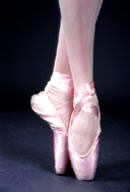
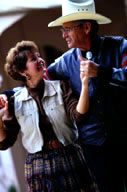
DanceDance is an entertaining and fun combination of art, performance, and social activity. Whether you choose an individual form of dance, such as ballet, a variety of cultural dances, or couple’s dancing, such as Country & Western or Ballroom, the control of your entire body is extremely important in the beauty and satisfaction of your performance. Dance is a form of exercise, and if you do not give appropriate consideration to your overall physical conditioning, the potential for injury will increase. Achieving performance quality dance skills require a lot practice, repeating the same moves or dance steps over and over until fully mastered. If this unvaried practice is not managed carefully, the constant repetition can lead to a variety of injuries, either due to trauma caused by muscle fatigue, or due to overuse. Avoid practicing too much in too short a period of time. Just as in all sports, the body needs a chance to recover before being pushed further in either dance practice or performance. CORE CONDITIONING & CARDIOVASCULAR EXERCISE: Thigh conditioning plays an important role in helping to protect the knees. Quadriceps strengthening exercises, such as doing 50 leg lifts a day while sitting in a chair, should become a habit. It is also important to follow an exercise program which will maintain good balance between the strength of the quadriceps and of the hamstrings. Dancers need to do what they can to prevent falling. Something as simple as walking forwards and backwards for a few minutes every day on a 2x4 or 2x6 plank will help maintain ankle strength and, even more importantly, increase good proprioception. Your regular exercise program should also include general flexibility training, especially for your back, hamstrings, and Achilles tendons. For cardiovascular fitness, concentrate on non-weight bearing activities, such as swimming, running in a swimming pool, or riding a bike. The demands put on the feet, ankles, legs, and knees in dance provide amply opportunity for potential overuse injuries, so it is best to avoid putting unnecessary stresses and weight loads on these areas for your cardiovascular exercise. MECHANICS OF BODY MOVEMENT: Posture is very important, and your instructor should be very aware of your posture at all times. Proper posture enhances the performance, and also helps to prevent injury. However, some dance movements naturally do put the spine in a position not otherwise normal for the body. Core body conditioning and limiting the time of repetitive practice can help. BALLET FOR YOUNG CHILDREN: Because so many of the fundamental ballet movements taught to young children require the use of muscles on the inside and outside of their legs, and because these muscles in young children are not yet strong, these movements are perhaps best taught at the barre where the child can easily maintain weight and balance on the other leg while also holding onto the barre. As the children's inner and outer leg muscles get stronger, they will be able to do these moves independently. It is also important not to push for "perfect" foot positioning with young children. To do so would put inapporpriate forces across young joints and bones which are still growing. Striving for "perfection" should wait until the child has achieved more height. PROPER DANCING SHOES: Shoes needs to fit your feet appropriately. Your shoes should be comfortable on your feet, providing good support. They also should be comfortable to the ball of the foot. Shoes that are too tight can cause problems like Morton's neuroma, a pinched and swollen nerve in the toes. Shoes which are too loose will allow your foot to move around too much, resulting in potential blisters, improper technique, and ankle sprains. Dancing in a shoe which has too high a heel is also a problem. That can make all dance moves much harder to do, and will put the spine in an improper position just to maintain balance. It also is a little embarrassing to have to tell your orthopedic surgeon that you got hurt because you "fell off" your shoes. DANCING SURFACE: POINTE: Even though pointe shoes can be expensive, the shoes need to be thought of as "proper equipment". They must fit correctly and be in good condition. Continuing to dance in broken or worn out pointe shoes is a problem. A dancer should always have an extra pair of pointe shoes (in good condition) in her dance bag, ready to switch into as soon as a shoe problems occur. It may be a good idea to alternate between pointe shoes at least once during an extended practice. And keep in mind that injury can occur from something as simple as poor placement of the pointe shoe ribbon. Bloody toes from pointe are not a "badge of honor". It is a clear indication that something is wrong. Seek medical help, and take your pointe shoes with you for the appointment. Because of the position of the feet must be in when dancing pointe, and because this requires the Achilles tendon to be shortened, plantar fasciitis can be a common problem. The Achilles tendon needs to be kept in good, flexible condition. The Achilles tendon should be gently stretched as part of the warm-up and cool-down. Wearing a supportive, high-top aerobic shoe after practice can help, as can sleeping with a 90 degree night splint. — Tom Parr, M.D. Reviewed and updated: 06/28/2011 |
COMMON SPORTS INJURIES & SAFE PARTICIPATION
Baseball & Softball
SPORTS MEDICINE RECOGNITION
Recognized as one of the "Top Sports Medicine Orthopedic Surgeons in the USA" by Castle Connolly. Dr. Parr has been named as an "Outstanding Orthopedic Surgeon of Texas", as seen in SPORTS ILLUSTRATED.
SPEAKER'S PROGRAM:
|
||||||||





|
| 14090 Southwest Freeway #130 Sugar Land TX 77478 Phone: 281-491-7111 |
© Copyright 2009-2018 Thomas J. Parr, M.D. |
 |